LESSON 2
Finding the Right Words
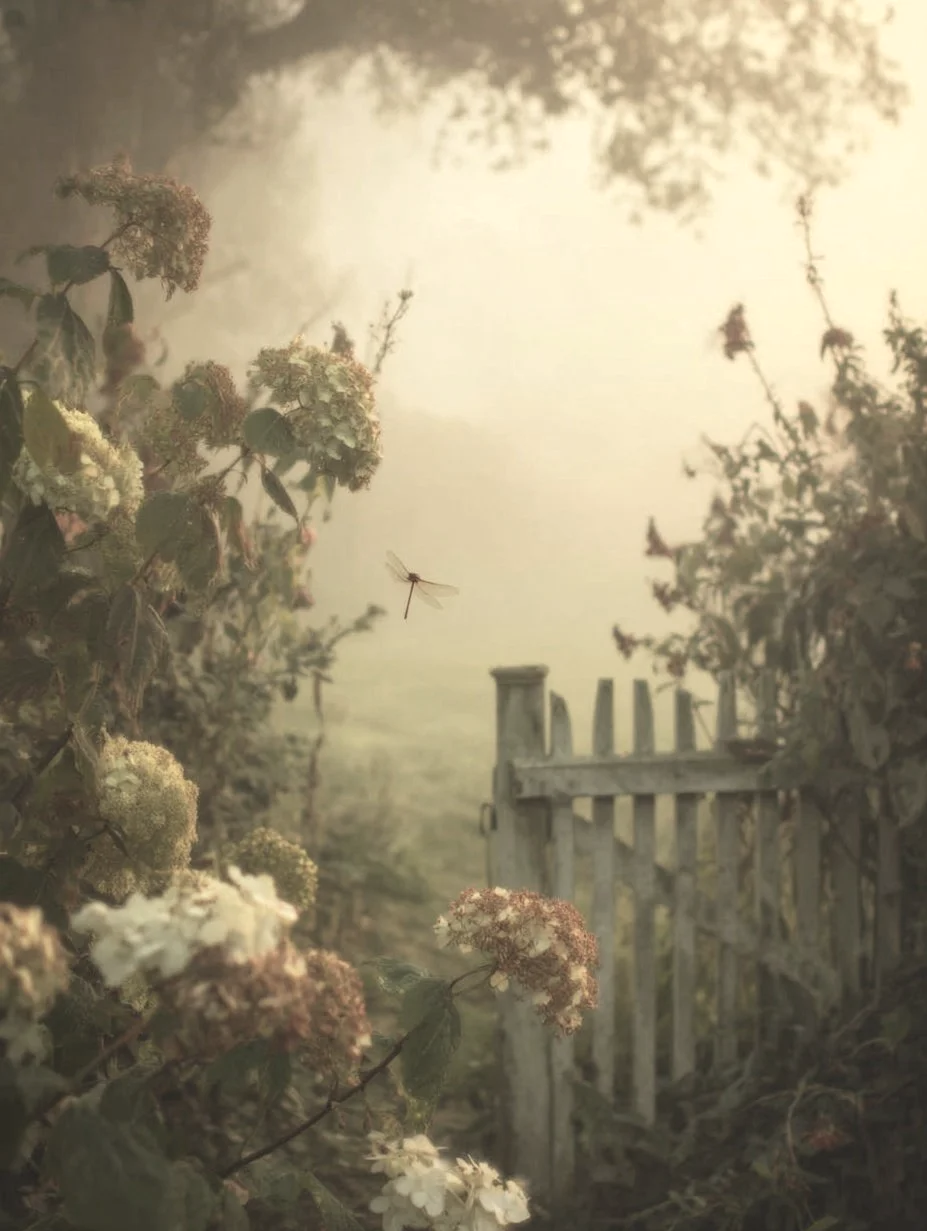
How to bring your observations to life through sensory details and imagery
Have you ever tried to describe something beautiful, only to discover that the words seemed rather inadequate?
Perhaps you watched the sun disappear behind the hills, turning the sky a remarkable shade of pink. Or you stepped into a familiar room and caught the scent of something that reminded you of childhood.
You knew exactly what you had experienced. You could picture it perfectly in your mind.
But when you tried to put it into words, all you could manage was, It was beautiful.
This is one of the little frustrations of writing. We feel something quite clearly, yet struggle to make another person feel it, too.
Fortunately, there is an art to finding the right words, and it is a skill anyone can learn.
In our first lesson, The Art of Seeing, we practiced paying attention to the small details of everyday life.
Today, we will learn how to use those details to create writing that feels vivid, natural, and alive.
Help Your Reader Experience the Moment
Imagine that you are telling a friend about a lovely morning in the countryside.
You might begin:
It was a peaceful morning, and everything was beautiful.
Your friend understands that you enjoyed the morning, but she cannot quite imagine what made it so peaceful.
Now consider:
The fields lay quiet beneath a pale morning sky. Somewhere beyond the hedgerow, a blackbird was singing, and the damp earth carried the faint scent of yesterday's rain.
The second description gives your friend something to experience.
She can picture the fields, hear the blackbird, and almost smell the damp earth.
Rather than simply telling her that the morning was peaceful, you have allowed her to discover that feeling for herself.
This is one of the most useful principles of descriptive writing:
Whenever possible, give your reader the details that create a feeling, rather than naming the feeling alone.
Writing With the Five Senses
We experience the world through sight, sound, smell, touch, and taste.
When we write, these senses help us recreate an experience for someone who was not there.
Consider a familiar kitchen on a winter morning.
Sight
The early sunlight stretched across the kitchen floor, catching the worn edges of the wooden table.
Sound
The kettle began its familiar murmur while the wind moved softly against the windowpanes.
Smell
The scent of toasted bread drifted through the room.
Touch
The warmth of the mug settled comfortably between her cold hands.
Taste
The tea was strong and sweet, just as she liked it.
Each detail adds something different to the scene.
But here is something important: you do not need to include all five senses in everything you write.
In fact, trying to use every sense can make a paragraph feel crowded or unnatural.
Choose the details that matter most.
A description of a garden might rely on color and sound. A childhood memory may come alive through a familiar scent. A winter walk might be best remembered through the feeling of cold air against your cheeks.
Good descriptive writing is not about including everything.
It is about choosing what helps your reader feel present.
The Power of a Precise Word
Sometimes the difference between an ordinary sentence and a memorable one is a single word.
Consider:
The leaves moved in the wind.
Now try:
The leaves trembled in the wind.
Or:
The leaves rustled in the wind.
Or perhaps:
The leaves scattered across the path.
Each sentence describes movement, but each creates a different picture.
Trembled suggests a delicate, almost nervous motion.
Rustled brings sound into the description.
Scattered suggests a stronger movement, perhaps a sudden gust.
None of these words is necessarily better than the others.
The right word is the one that most faithfully describes what you want your reader to imagine.
This is why writing beautifully does not require an impressive vocabulary.
Often, a simple but precise word is far more effective than an elaborate one.
Choosing Images That Feel Natural
Writers sometimes use comparisons to help readers imagine something unfamiliar or see something familiar in a new way.
For example:
The frost lay across the fields like a thin veil of silver.
We know the frost is not actually a veil. But the comparison helps us imagine its delicate appearance.
Or consider:
The old house seemed to settle into the evening as the last light disappeared from its windows.
A house cannot literally settle into an evening, but the image suggests stillness, age, and comfort.
These little touches of imagery can give writing warmth and personality.
However, there is no need to decorate every sentence.
If every cloud becomes a feather, every flower a jewel, and every breeze a whisper, the writing may begin to feel rather crowded.
Sometimes the loveliest description is also the simplest.
One pale rose remained beside the garden gate.
There is no elaborate comparison in that sentence, yet it creates a clear and rather tender picture.
Use imagery when it adds something meaningful, not simply because you want your writing to sound poetic.
We will explore these literary techniques more closely in a future lesson.
Finding the Words That Belong to You
Two people can witness the same scene and describe it quite differently.
One might notice the changing colors of the sky.
Another might remember the sound of the wind in the trees.
A third might be reminded of a summer evening from childhood.
None is wrong.
Each writer brings her own attention, memories, and feelings to the page.
This is part of what makes writing personal.
You do not need to describe a moment the way someone else would. You need to find the words that express what you noticed.
And if a sentence feels unnatural when you read it aloud, it may be worth simplifying.
The most beautiful words are not always the most elaborate ones.
Often, they are the ones that sound unmistakably like you.
Your Writing Exercise: Bringing a Moment to Life
For this exercise, we will take a simple observation and gradually turn it into a more vivid description.
You will need about fifteen minutes and a notebook or piece of paper.
Step One: Begin with a simple sentence.
Choose an ordinary moment from your day.
For example:
It was raining outside.
Or:
The kitchen was warm.
Or:
I walked through the garden.
Write your own simple sentence at the top of the page.
Step Two: Gather sensory details.
Think about the moment and write down three details you remember.
Ask yourself:
What could I see?
What could I hear?
Was there a particular scent, texture, or sensation?
Which detail made this moment different from any other?
For a rainy afternoon, you might remember:
Raindrops collecting along the window.
The soft pattering of rain on the roof.
The smell of damp leaves drifting through an open door.
Do not worry about writing beautiful sentences yet. Simply collect the details.
Step Three: Choose two details.
Look over your observations and choose the two that create the clearest picture.
You do not need to use everything.
Step Four: Rewrite your sentence.
Now use those details to expand your original sentence into two or three sentences.
For example, instead of:
It was raining outside.
You might write:
Rain gathered along the windowpanes, the drops joining together before slipping slowly down the glass. Beyond the open door came the earthy scent of wet leaves.
Notice that we have not used the words beautiful, peaceful, or cozy.
And yet, the description may suggest those feelings.
Step Five: Find one word to improve.
Read your new description aloud.
Is there a word that could be more precise?
Perhaps moved could become drifted.
Perhaps shone could become glimmered.
Perhaps loud could become thunderous.
Change just one word if it improves the picture.
Then read your description again.
Does it sound natural? Can you imagine the moment?
If so, you have practiced the art of finding the right words.
A Final Thought
There is a quiet satisfaction in discovering that a familiar experience can be made vivid through a handful of carefully chosen words.
A rainy afternoon becomes more than a rainy afternoon.
An old kitchen becomes a place filled with warmth, memory, and the small sounds of ordinary living.
A garden becomes something another person can almost step inside.
And the loveliest part is that these moments were there all along.
We simply needed to notice them and then find the words to share them.
As you continue through your day, pay attention to the details that stay with you. A particular color, an unexpected sound, or a familiar scent may be the beginning of something worth writing.
You needn't search for extraordinary experiences.
Sometimes, all that is required is a closer look—and a few well-chosen words.
Until next time,
The Writing Circle at Penrose House
Coming Next: Lesson Three — The Music of Sentences
In our next lesson, we will discover how the length, rhythm, and arrangement of our sentences can make writing flow naturally and beautifully.

From the Penrose House Library
A Little Further Reading
Would you like to see these ideas at work?
In Dear Jane: Sunday's Garden, an ordinary afternoon becomes a small literary adventure through carefully chosen details, gentle humor, and observation.
As you read, notice how the descriptions bring the garden to life without relying on elaborate language.
Read Dear Jane: Sunday's Garden HERE