LESSON 4
Literary Techniques
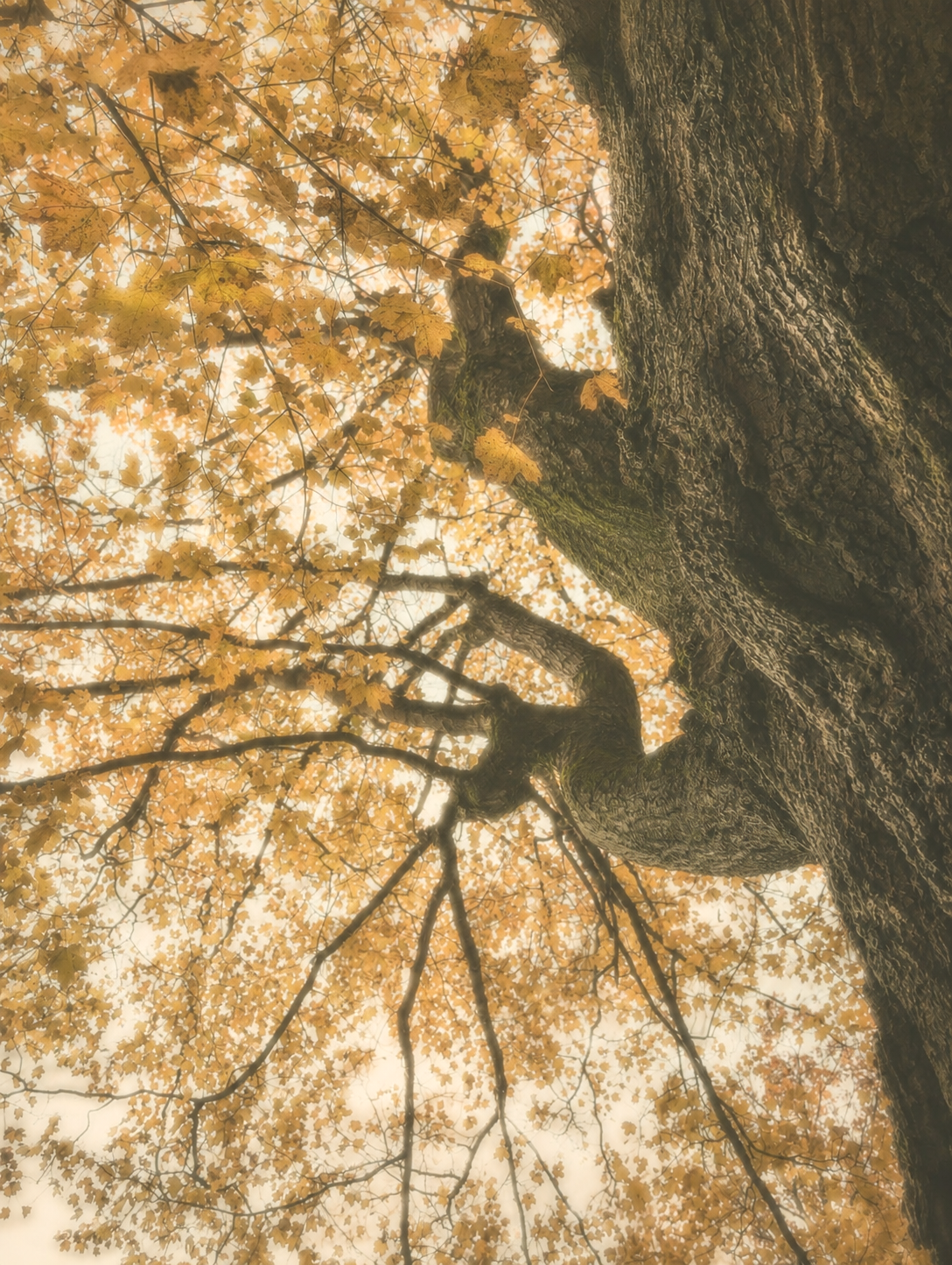
How to add beauty, personality, and meaning to your writing
Have you ever read a description that made you see something familiar in an entirely new way?
Perhaps a writer described the moon as a silver coin resting above the rooftops. Or an old house seemed to sigh as the evening wind moved through its windows.
You knew, of course, that the moon was not a coin and that houses do not sigh.
And yet, somehow, those words made perfect sense.
This is one of the pleasures of literary writing. With a carefully chosen comparison or an unexpected image, we can bring a little more life to an ordinary description.
In our previous lessons, we learned to notice the details around us, choose words that bring them to life, and arrange our sentences with rhythm and flow.
Today, we will explore four literary techniques that can add another layer of meaning and personality to our writing.
Their names may sound familiar from school: simile, metaphor, personification, and symbolism.
But don't let the terminology trouble you.
These are simply different ways of helping readers see, feel, and understand something more deeply.
And you may be surprised to discover how naturally you already use them.
1. Simile: Making a Comparison
A simile compares one thing to another, usually using the words like or as.
For example:
The frost lay across the fields like a delicate veil of silver.
We know that frost is not actually a veil. But the comparison helps us imagine how lightly it covers the grass.
Or consider:
The old wooden gate creaked like a chair being pulled across the floor.
This comparison gives the reader a familiar sound to imagine.
A good simile helps us understand something by connecting it to something else we already know.
But not every comparison is equally useful.
Consider:
The flowers were as pretty as jewels.
This gives us a general impression of beauty, but it doesn't tell us very much about the flowers themselves.
Now try:
The raindrops clung to the rose petals like tiny glass beads.
This comparison is more specific. We can imagine the round drops of water catching the light.
The best similes don't simply make something sound beautiful. They help the reader see it more clearly.
When writing a simile, ask yourself whether the comparison genuinely adds something to the description.
If it doesn't, you may not need it at all.
2. Metaphor: Seeing One Thing as Another
A metaphor is closely related to a simile, but instead of saying that one thing is like another, it describes one thing as another.
For example:
The garden was a patchwork quilt of autumn colors.
Of course, the garden is not literally a quilt.
But the image helps us imagine an arrangement of different colors and shapes, much like pieces of fabric sewn together.
Or consider:
Her grandmother's kitchen was the heart of the house.
We understand that the kitchen was not an actual heart. It was the place where family life gathered, where warmth and comfort could always be found.
A metaphor can help us communicate an idea or feeling without explaining it at length.
Compare:
The old house was very important to the family because it held many happy memories.
With:
The old house was a treasure chest of family memories.
The metaphor gives the reader a picture of something precious, filled with things worth keeping.
However, metaphors work best when they feel natural.
You needn't turn every object into something else. Sometimes a tree is simply a tree, and that is quite enough.
Use a metaphor when it reveals something meaningful that an ordinary description might not express as clearly.
3. Personification: Giving Life to the Inanimate
Personification is one of my favorite literary techniques, particularly when writing about nature and the small happenings of everyday life.
It involves giving human qualities or actions to something that is not human.
For example:
The old house seemed to welcome us home.
Or:
The wind wandered through the garden, stirring the last of the fallen leaves.
A house cannot literally welcome someone, and the wind cannot decide to wander.
But these descriptions give the scene a little personality.
Personification can be especially charming when used with restraint.
Consider:
The sun shone through the window.
A perfectly clear sentence.
Now try:
The afternoon sun found its way through the curtains and settled comfortably upon the floor.
The second version makes the sunlight seem almost like a visitor who has come to stay awhile.
It creates a feeling of warmth and familiarity.
But here is something important.
Personification should not make every object in your writing behave like a person.
If the flowers are dancing, the trees are whispering, the clouds are laughing, and the garden gate is complaining, the effect may become rather overwhelming.
Choose one small moment where a touch of personality adds something delightful.
Then allow the rest of the description to remain simple.
4. Symbolism: When Something Means a Little More
Symbolism is slightly different from the techniques we've explored so far.
Rather than comparing two things, symbolism allows an object, place, or event to suggest a larger idea or feeling.
Imagine a story about a woman returning to her childhood home after many years.
As she approaches the house, she notices that the old garden gate is still standing, although its paint has faded and its hinges have begun to rust.
The gate is simply a gate.
But within the story, it might also come to represent the passage of time, the persistence of memory, or the connection between childhood and adulthood.
That additional meaning is symbolism.
Another example might be a single flower blooming in an otherwise empty garden.
Depending on the story, the flower could suggest hope, endurance, or the possibility of a new beginning.
But symbolism needn't be complicated or mysterious.
And it certainly doesn't mean that every object must have a hidden meaning.
Sometimes a flower is simply a flower.
The important thing is that the meaning grows naturally from the experience you are describing.
A symbol becomes powerful when the reader understands its significance through the story, rather than being told exactly what it represents.
Knowing When to Use These Techniques
Now that we've explored these four techniques, you may be tempted to include all of them in your next paragraph.
I would encourage you to resist that temptation.
Beautiful writing is not a competition to see how many literary techniques can fit into a single page.
In fact, too many comparisons and imaginative descriptions can distract from the very moment you are trying to share.
Consider this passage:
The golden sun was a shining coin in the sky, while the whispering trees danced like graceful ladies and the flowers smiled at the morning.
There are several literary techniques at work here, but they compete for attention.
Now consider:
Morning sunlight moved slowly across the garden, catching the dew upon the roses. Beyond the wall, the old apple tree stood quietly in its familiar place.
This version is simpler, but it creates a clear and gentle picture.
We might add one carefully chosen touch of imagery:
Morning sunlight moved slowly across the garden, catching the dew upon the roses. Beyond the wall, the old apple tree stood like a faithful old friend.
The comparison adds a feeling of familiarity and affection.
And because it is the only obvious comparison in the passage, it has room to make an impression.
A single well-chosen image is often more effective than several competing ones.
Your Writing Exercise: One Moment, Four Possibilities
For today's exercise, we will practice using literary techniques without overwhelming our writing.
You will need about fifteen minutes and a notebook or piece of paper.
Step One: Choose an ordinary subject.
It might be:
An old tree.
A garden gate.
A rainy window.
A favorite chair.
A quiet room.
A familiar path.
Choose something you can picture clearly.
Step Two: Write one simple sentence.
For example:
The old tree stood beside the house.
This will be our starting point.
Step Three: Try a simile.
Compare your subject to something familiar, using like or as.
For example:
The old tree stood beside the house like a watchful guardian.
Now try writing your own comparison.
Step Four: Try a metaphor.
Describe your subject as something else.
For example:
The old tree was a guardian of the house, its branches stretching above the roof.
Notice how the comparison is now more direct.
Step Five: Try personification.
Give your subject a human quality or action.
For example:
The old tree leaned toward the house, as though listening to the conversations within.
This gives the tree a little personality.
Step Six: Consider symbolism.
Think about what your subject might represent within a memory or story.
Perhaps the tree has stood beside your family home for generations.
It might suggest permanence, belonging, or the passing of time.
You could write:
The old tree had stood beside the house for as long as anyone could remember. Even after everything else had changed, it remained.
The tree now carries a meaning beyond its physical appearance.
Step Seven: Choose your favorite version.
Read over your four attempts.
Which one feels most natural?
Which one adds something meaningful to the description?
You may discover that you prefer the original sentence without any embellishment.
That is perfectly fine.
The purpose of this exercise is not to prove that every sentence needs a literary technique.
It is to learn how these tools work so that you can choose when to use them.
A Final Thought
There is a certain pleasure in discovering how much can be expressed through a few carefully chosen words.
A garden gate may become a reminder of childhood.
An old tree may seem like a faithful companion.
A veil of frost may transform an ordinary field into something almost magical.
These techniques allow us to share more than what we see. They can help us communicate what a moment means to us.
But remember that the most important part of your writing is not the cleverness of your comparisons.
It is the truth of what you are trying to express.
Begin with what you genuinely noticed.
Choose the words that feel right.
And when a comparison, an image, or a symbol helps your reader understand something more deeply, allow it to find its place.
Sometimes the smallest touch of imagination is all a sentence needs.
Until next time,
The Writing Circle at Penrose House
Coming Next: Lesson Five — Writing from Memory
In our next lesson, we will explore how to turn personal memories into meaningful prose, preserving not only what happened but also why those moments have stayed with us.