LESSON 6
Finding Your Voice
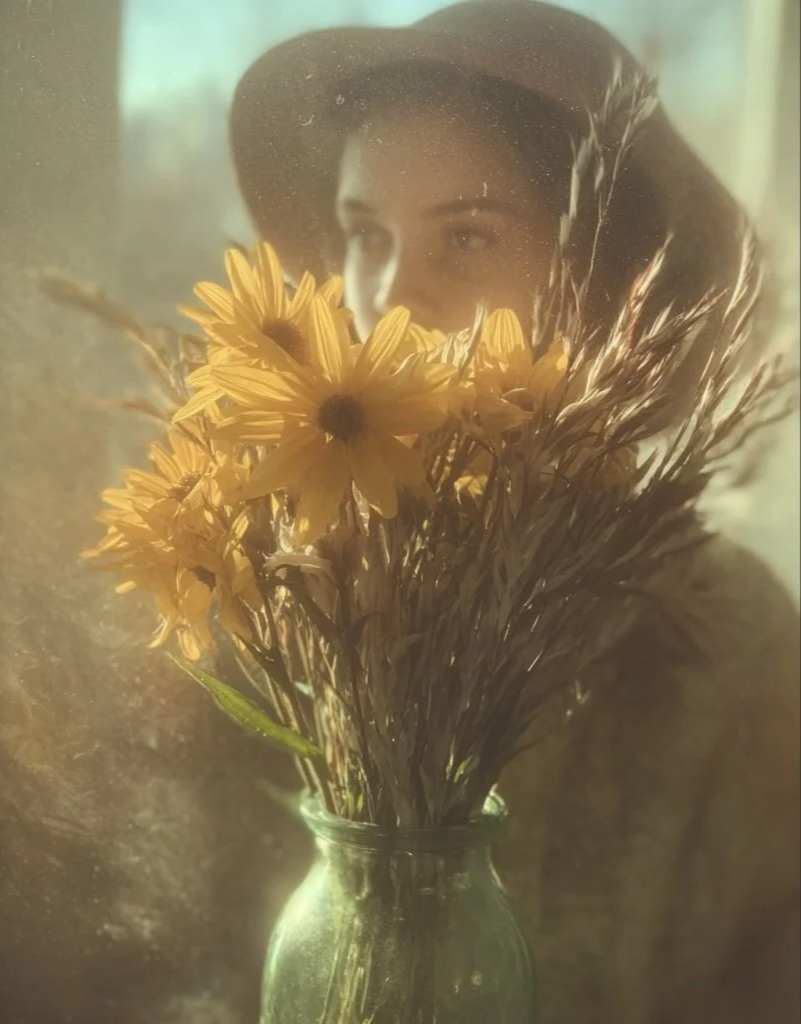
How to develop a writing style that feels natural, personal, and unmistakably your own
Have you ever read something so beautifully written that you wished you could write just like its author?
Perhaps you admired the gentle humor of a favorite novelist, the graceful descriptions in an old book, or the thoughtful observations of an essayist.
You may even have tried to imitate that style in your own writing, carefully choosing words and arranging sentences in the hope of capturing a little of what made it so lovely.
There is nothing wrong with learning from writers we admire.
But somewhere along the way, we must discover something equally important.
We have our own way of seeing the world.
And that way of seeing deserves a voice of its own.
In our previous lessons, we have explored the practical skills of literary writing: noticing details, finding descriptive words, creating rhythm, using imagery, and writing from memory.
Today, we will bring those skills together and explore how to develop a writing style that feels natural, personal, and true to you.
What Is a Writing Voice?
When we speak about a writer's voice, we are describing the qualities that make their writing feel distinctive.
It is not simply the words they choose.
It is also the way they arrange their thoughts, the details they notice, the feelings they express, and the manner in which they speak to their reader.
Think about the people you know well.
You can often recognize someone's voice even before you see who is speaking.
One friend may tell stories with lively enthusiasm, adding amusing details and little interruptions.
Another may speak thoughtfully, choosing her words with care.
Someone else may have a wonderfully dry sense of humor, making the simplest observation unexpectedly entertaining.
Each has a recognizable way of expressing herself.
Writing is much the same.
A writer's voice grows from the combination of what she notices, what matters to her, and how she chooses to share it.
Your writing voice is not something you need to invent. It is something you gradually learn to recognize and develop.
Begin With What You Naturally Notice
One of the simplest ways to discover your writing voice is to pay attention to the things that interest you.
Imagine three people sitting in the same garden on a summer afternoon.
The first notices the flowers, their colors, and the way the sunlight moves across the borders.
The second notices the birds, their little quarrels at the feeder, and the blackbird who seems determined to have the last word.
The third notices an old wooden bench and remembers sitting there many years earlier with someone she loved.
All three are observing the same garden.
But each would write something quite different.
One might create a vivid description of the flowers.
Another might write a gently humorous account of the birds.
The third might begin with the bench and find herself writing about memory, affection, and the passing of time.
None of these approaches is better than the others.
Each reflects the writer's particular interests and perspective.
And this is where an individual voice begins.
The things you notice—and the meaning you find in them—are part of what makes your writing your own.
Write as Though You Are Speaking to Someone You Know
Sometimes, when people sit down to write, they suddenly begin using words and expressions they would never use in ordinary conversation.
A simple thought becomes unnecessarily complicated.
For example:
The magnificent floral specimens displayed an extraordinary abundance of vibrant coloration.
That sentence may sound impressive at first glance, but it doesn't feel particularly natural.
Now consider:
The garden was overflowing with flowers, each one seemingly determined to outshine its neighbor.
The second version has more personality.
We can almost hear someone making the observation with a little smile.
Or perhaps another writer would say:
The garden was full of flowers, and I could hardly decide which I loved most.
This version is simpler and more intimate.
Both are perfectly good ways to describe the same scene.
The difference lies in the personality of the writer.
One enjoys a touch of humor.
The other prefers a quieter, more personal observation.
When you're uncertain about how to express something, imagine telling it to a thoughtful friend.
What would you naturally say?
Which words would feel comfortable?
Where might you pause, smile, or add a small observation?
You needn't write exactly as you speak, of course. Writing allows us to shape and polish our thoughts.
But your natural manner of expression is a wonderful place to begin.
Discover the Tone That Suits You
A writer's voice can take on different tones.
Tone simply means the feeling or attitude conveyed by the writing.
A piece might be playful, thoughtful, nostalgic, cheerful, serious, or quietly reflective.
Consider a rainy afternoon.
A playful writer might say:
The rain arrived just as I had finished hanging out the washing, which I suspect was no coincidence.
A reflective writer might say:
Rain settled over the garden, bringing with it the familiar stillness of afternoons that ask nothing of us.
A straightforward writer might say:
It rained throughout the afternoon, so I stayed indoors with a book.
Each sentence has its own character.
And each could belong to a different writer—or even to the same writer on different days.
Your voice does not need to remain exactly the same in everything you write.
You may be humorous in one piece and thoughtful in another.
What matters is that the tone feels appropriate to what you want to express.
Ask yourself:
How do I want my reader to experience this moment?
Do you want to make her smile?
Invite her to remember something?
Help her appreciate a small beauty she might otherwise overlook?
Your answer can help guide the tone of your writing.
Don't Mistake Beautiful Writing for Complicated Writing
There is a temptation, particularly when we admire literary writing, to believe that every sentence should be graceful, poetic, and filled with remarkable words.
But beautiful writing does not need to be elaborate.
Consider:
I still miss the old house.
Five simple words.
Yet, in the right place, they could carry an entire history of affection and longing.
Or:
She always saved the best piece for me.
Again, the words are ordinary.
But they suggest something tender about the person being remembered.
There is beauty in simplicity.
A carefully chosen detail, an honest observation, or a quiet sentence can sometimes express more than an elaborate description.
This does not mean you should avoid poetic language or imaginative comparisons.
If those things come naturally to you, they may become a lovely part of your style.
But don't feel obliged to use them simply because you are writing something literary.
The purpose of beautiful writing is not to impress your reader with words. It is to communicate something worth sharing.
Learn From Other Writers Without Losing Yourself
Reading is one of the loveliest ways to develop your writing.
When you encounter a passage you admire, take a moment to consider what makes it effective.
Does the writer use gentle humor?
Are the descriptions especially vivid?
Do the sentences have a pleasing rhythm?
Does the writing feel intimate, as though someone were speaking directly to you?
These are useful things to notice.
And you can practice the techniques you admire without trying to become a copy of the author.
Perhaps you love the warmth of one writer's storytelling and the clarity of another's descriptions.
Over time, the things you learn will become part of your own growing skill.
But your experiences, observations, memories, and thoughts will remain uniquely yours.
That is what gives your writing its individuality.
Your Writing Exercise: The Same Moment, Three Voices
For today's exercise, we will experiment with tone and discover which kinds of expression feel most natural to you.
You will need about twenty minutes and a notebook or piece of paper.
Step One: Choose a simple moment.
Select an ordinary experience that you can picture clearly.
Perhaps:
Watching birds in the garden.
Drinking tea beside a window.
Walking along a familiar path.
Finding an old photograph.
Sitting outside on a summer evening.
Choose something that interests you.
Step Two: Write a straightforward description.
Begin with three or four sentences explaining what happened.
For example:
I sat beside the window while the rain fell outside. The garden was quiet. A small bird landed on the fence and stayed there for a moment before flying away.
Keep this first version simple.
Step Three: Write a playful version.
Now describe the same moment with a little humor or personality.
For example:
The rain had apparently decided to stay for the afternoon. A small bird arrived on the garden fence, surveyed the situation with considerable disapproval, and promptly departed.
Notice how the tone has changed.
The scene is much the same, but the writing now has a playful character.
Step Four: Write a reflective version.
Describe the same moment again, this time with a quieter, more thoughtful tone.
For example:
Rain softened the garden beyond the window. For a moment, a small bird rested upon the fence, and I watched until it disappeared among the trees. There was something comforting about the stillness of the afternoon.
This version creates a different feeling.
Neither is better.
They simply offer different ways of experiencing the same moment.
Step Five: Read all three versions aloud.
Now ask yourself:
Which version felt easiest to write?
Which sounded most natural when I read it?
Did I enjoy adding humor, or did I prefer a thoughtful description?
Were there particular words or expressions that felt especially like me?
Is there something from each version I would like to keep?
You may discover that your favorite writing combines qualities from more than one version.
Perhaps you enjoy gentle humor within an otherwise reflective piece.
Perhaps you prefer simple, direct descriptions with an occasional poetic image.
There is no correct combination.
Step Six: Write a final version in your own voice.
Using whatever you discovered, write the moment one more time.
This time, don't try to sound playful, poetic, or reflective unless that is genuinely how you want to express the experience.
Simply write it in the way that feels most natural and satisfying to you.
Read it aloud.
Does it sound like something you would enjoy sharing with a friend?
Does it express what you wanted to say?
If so, you are beginning to recognize your own writing voice.
A Final Thought
Finding your voice is not something that happens in a single afternoon.
It develops quietly, through reading, observing, writing, and discovering which words feel right.
You may notice that certain subjects return again and again in your work.
Perhaps you are drawn to gardens, family memories, familiar places, or the changing seasons.
Perhaps your writing often carries a touch of humor, or perhaps you naturally look for the meaning beneath ordinary experiences.
These recurring interests and qualities are not limitations.
They are part of what makes your writing yours.
And as you continue practicing, you may find that you become less concerned with sounding like a writer and more interested in expressing what you genuinely have to say.
That is a lovely place to arrive.
Because the world does not need another imitation of a writer you admire.
It has already heard that voice.
What it hasn't heard, quite in the same way, is yours.
Until next time,
The Writing Circle at Penrose House
Coming Next: Lesson Seven — The Reflective Essay
In our final lesson, we will bring everything together and learn how to shape an ordinary experience into a complete reflective essay, from the first observation to the final sentence.